
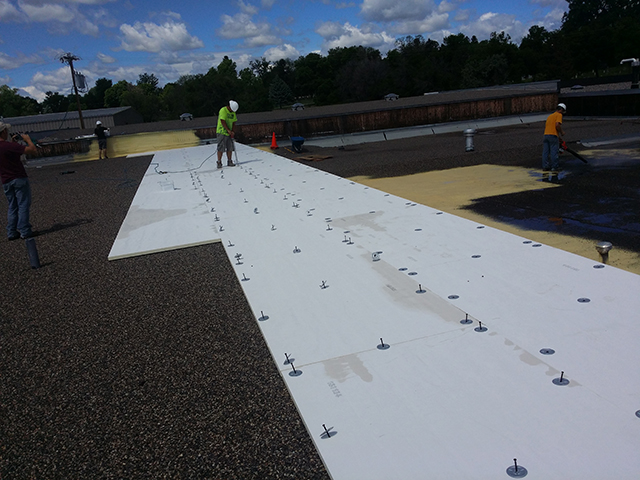
A commercial roof is part of the building’s operating system. Planned maintenance helps property teams catch small changes before they interrupt tenants, inventory, equipment, or normal business activity. The best program is simple enough to follow consistently and detailed enough to create a useful condition history.
Create a regular inspection rhythm
Schedule professional reviews at practical intervals and after significant weather events. The appropriate frequency depends on the roof type, age, exposure, drainage, rooftop traffic, warranties, and the critical nature of the building’s contents.
Keep drains, scuppers, and gutters clear
Standing water adds weight and can accelerate deterioration around seams, penetrations, and low areas. Remove leaves, packaging, branches, and other debris without damaging the membrane. Confirm that discharge paths remain open and direct water away from the building.
Track rooftop traffic and contractor activity
HVAC technicians, electricians, sign installers, and other trades may need roof access. Maintain a roof-access log, communicate approved walk paths, and check the work area after service. Dropped tools, open panels, and unsealed penetrations can create preventable problems.
[cta]
Review vulnerable details
- Flashing at walls, curbs, and penetrations
- Seams, laps, fasteners, and termination bars
- Roof edges and wind-exposed corners
- Membrane around equipment and service areas
- Sealants and pitch pockets
- Previous repair locations
Record conditions with consistent photos
Photograph the same roof areas from similar positions over time. Note the date, weather, observed condition, and any work completed. A consistent record helps teams see whether a condition is stable, progressing, or related to a specific event.
Coordinate maintenance with capital planning
Inspection findings should feed into the property budget. Some items need immediate repair; others can be monitored or grouped into a planned restoration project. This distinction helps avoid both deferred risk and unnecessary work.
A useful maintenance report should explain the condition, the priority, and the recommended next step—not simply list defects.
Frequently asked questions
Can building staff perform roof inspections?
Staff can safely monitor interior conditions, drainage discharge, and visible issues from approved access points. Technical condition assessments and any roof walking should be handled according to safety procedures and by qualified professionals.
What information should a roof file contain?
Keep installation records, warranties, plans, inspection reports, repair invoices, photographs, access logs, and contact details together so future decisions are based on the full history.