
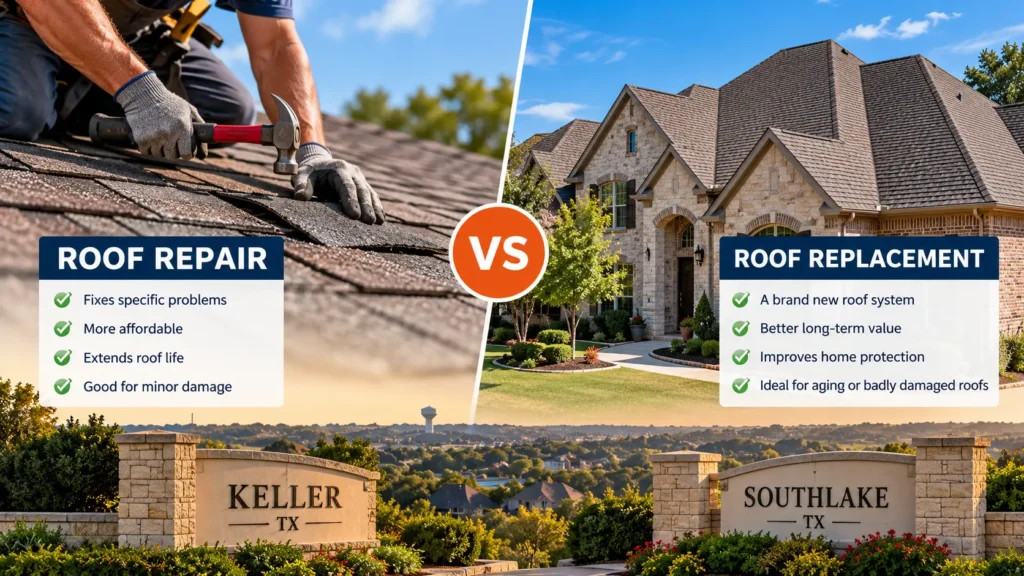
When a roof starts showing leaks, missing shingles, stains, or other signs of wear, one of the biggest questions homeowners face is whether they should repair the existing roof or replace it entirely. Knowing the difference can save you money in the short term while also helping you avoid repeated repairs on a roof that has reached the end of its useful life.
For homeowners in Keller and Southlake, the decision can be especially important because Texas roofs deal with intense heat, heavy storms, hail, strong winds, and rapid temperature changes. These conditions can accelerate roofing wear and turn a small problem into a larger issue.
So, should I repair or replace my roof? The answer depends on the roof’s age, the extent of the damage, the condition of the underlying roofing system, and how often problems are occurring.
When Roof Repair Makes More Sense
Roof repair is often the better option when damage is limited to a small, clearly defined area and the rest of the roof remains in good condition.
For example, a roof may only need repair after a storm damages a few shingles, flashing becomes loose, or a small leak develops around a vent or other penetration. In these situations, repairing the affected area can restore protection without the expense of replacing the entire roofing system.
Roof repair may make sense when:
- The damage is isolated to a small section.
- Most shingles are still in good condition.
- The roof is relatively young.
- There are no widespread signs of water intrusion.
- The underlying decking and structure remain sound.
- Previous repairs have been infrequent and effective.
A professional inspection should still come first. A visible leak does not always show where the actual problem began. Water can travel underneath roofing materials before appearing on an interior ceiling.
For homeowners considering roof repair in Keller, TX, a proper inspection can help determine whether the issue is localized or part of a larger roofing failure. You can explore Qualitas Roofing’s roofing services to see the types of residential roofing solutions available.
When Roof Replacement Is the Better Choice
Roof replacement becomes more practical when the roof has widespread damage, is approaching the end of its expected service life, or has developed recurring problems despite previous repairs.
One of the biggest mistakes homeowners make is continuing to repair an aging roof simply because each individual repair seems less expensive than replacement. Repeated repair bills can add up quickly, while the underlying problems continue to develop.
Common signs you need a new roof include:
- Shingles that are cracked, curled, brittle, or missing.
- Granules collecting in gutters or downspouts.
- Widespread discoloration or visible deterioration.
- Multiple leaks in different areas.
- Sagging sections of the roof.
- Repeated storm damage.
- Extensive flashing deterioration.
- Signs of moisture or water damage beneath the roofing system.
- A roof that is nearing or beyond its expected lifespan.
A roof does not necessarily need to be replaced simply because it reaches a certain age. However, age becomes much more important when it is combined with visible deterioration or recurring problems.
For homeowners considering residential roof replacement, an inspection can help determine whether replacement is justified or whether targeted repairs could still provide several more years of reliable service.
How Old Is Too Old for a Roof in Texas?
One of the most common questions homeowners ask is, “How old is too old for a roof in Texas?”
There is no single age that automatically means a roof needs replacement. Roofing material, installation quality, ventilation, maintenance, storm exposure, and weather conditions all influence longevity.
Asphalt shingle roofs commonly have useful service lives measured in decades, but Texas weather can place additional stress on roofing materials. Prolonged heat exposure, hail, high winds, severe thunderstorms, and repeated thermal expansion and contraction can contribute to premature wear.
That means a 15-year-old roof in excellent condition may perform better than a much newer roof that has experienced significant storm damage or poor installation.
Instead of relying only on age, homeowners should consider three things together: the roof’s age, its current condition, and the frequency of repairs.
If a roof is older and problems are becoming more frequent, replacement may provide better long-term value than continuing to repair it.
Roof Repair Cost vs Roof Replacement Cost
The roof repair cost vs. roof replacement cost comparison is not as simple as looking at two price tags.
A repair is usually less expensive upfront because only part of the roofing system is being addressed. However, repeated repairs can become costly when the roof is already deteriorating.
Replacement has a higher initial cost because it involves removing existing materials and installing a new roofing system. In return, homeowners receive a renewed roof system rather than another temporary solution to an aging one.
Several factors influence the cost of either option, including:
- Roof size and complexity.
- Roofing material.
- Extent of damage.
- Accessibility.
- Underlayment condition.
- Decking damage.
- Flashing and ventilation requirements.
- Labor and disposal.
- Storm-related damage.
- Local project conditions.
For this reason, homeowners should not automatically choose the cheapest immediate option. A low-cost repair may be financially sensible on a healthy roof, while the same repair may only delay a replacement that is already necessary.
[cta]
Keller and Southlake Roofs Face Tough Conditions
Keller and Southlake homeowners need to account for the local environment when evaluating roof condition.
North Texas roofs can experience intense summer heat, sudden storms, hail, strong wind, and heavy rainfall. Even when a roof looks acceptable from the ground, storm-related damage can affect shingles, flashing, ventilation components, and other parts of the system.
After a major storm, it is worth looking for signs such as missing shingles, exposed roofing material, damaged vents, displaced flashing, leaks, and granules around the property.
Storm damage does not always mean an entire roof needs to be replaced. However, hidden damage can worsen over time, particularly when water begins entering areas that were previously protected.
Homeowners can review Qualitas Roofing’s service areas to learn more about roofing assistance available in the communities they serve.
Should I Repair or Replace My Roof?
If you are asking, “should I repair or replace my roof?”, use these questions as a starting point:
How old is the roof?
A relatively new roof with isolated damage may be a strong candidate for repair. An older roof with widespread deterioration deserves a closer look for replacement.
How extensive is the damage?
One damaged area is very different from widespread damage across multiple roof slopes.
Has the roof been repaired repeatedly?
Frequent repairs may indicate that the roofing system is reaching the end of its useful life.
Is there evidence of structural or moisture damage?
Issues involving the roof deck, insulation, or prolonged moisture exposure can make replacement more appropriate.
Is the roof still performing reliably?
A roof that has remained watertight and structurally sound may not need immediate replacement simply because it is older.
The goal should be to choose the option that provides dependable protection and sensible long-term value, rather than simply choosing the lowest immediate cost.
Why Professional Inspection Matters
Roofing problems can be difficult to diagnose without a proper inspection. A small ceiling stain could come from damaged flashing, a failed shingle, a vent penetration, or water entering somewhere higher on the roof.
A professional roofer can evaluate visible roofing materials as well as other components of the system and determine whether the problem appears localized or widespread.
If replacement is necessary, a professionally planned new roof installation can address the entire roofing system rather than repeatedly treating individual symptoms.
Homeowners can also review Qualitas Roofing’s information about the company before scheduling an inspection or discussing a roofing project.
Making the Decision With Confidence
The best roof repair vs replacement decision comes from evaluating the entire roofing system instead of focusing on one leak or one damaged shingle.
Repair is often appropriate when damage is isolated and the roof remains structurally and functionally sound. Replacement becomes increasingly attractive when the roof is aging, damage is widespread, repairs are recurring, or the roofing system is no longer providing reliable protection.
For Keller homeowners, the right answer may be a targeted repair. For another homeowner in Southlake, a full replacement may offer better long-term value. Every roof is different.
Before making a decision, review the available Qualitas Roofing services, understand the condition of your existing roof, and have the problem evaluated professionally.
You can also browse the company’s roofing blog for additional information about maintenance, storm damage, replacement, and other roofing topics.
When you are ready to discuss your roof, you can contact Qualitas Roofing to arrange an inspection and get a recommendation based on the actual condition of your roofing system.
[cta]
Frequently Asked Questions
Is it cheaper to repair or replace a roof?
Roof repair is generally less expensive upfront because only a portion of the roofing system is addressed. However, if the roof is aging or requires repeated repairs, those costs can add up. In that situation, replacement may provide better long-term value.
What are the biggest signs you need a new roof?
Common signs include widespread shingle damage, repeated leaks, sagging areas, extensive granule loss, recurring storm damage, deteriorated flashing, and a roof that is reaching the end of its expected service life. A professional inspection is the best way to determine whether these issues justify replacement.
How old is too old for a roof in Texas?
There is no universal cutoff because lifespan depends on the roofing material, installation quality, ventilation, maintenance, and weather exposure. In Texas, heat, hail, wind, and severe storms can accelerate deterioration. Age should be considered together with the roof’s actual condition.
Can a roof be repaired after storm damage?
Yes, many roofs can be repaired after localized wind or hail damage. However, widespread or repeated damage may make replacement more practical. An inspection can determine whether the damage is isolated or affects a larger portion of the roofing system.
How do I know whether I need roof repair in Keller TX or replacement?
Look at the roof’s age, the size and frequency of the problems, the condition of the shingles and flashing, and whether there are signs of moisture or structural damage. A professional inspection can help determine whether a targeted repair is appropriate or whether replacement would provide better protection.
When should I consider roof replacement in Southlake TX?
Consider roof replacement when the roof has widespread deterioration, recurring leaks, extensive storm damage, or is nearing the end of its useful life. Replacement can be particularly worthwhile when continued repairs are becoming frequent and expensive.
Does an old roof always need to be replaced?
No. Roof age alone does not automatically require replacement. An older roof that remains in good condition may continue to perform well. However, age combined with visible deterioration, recurring leaks, or extensive repairs is a stronger indication that replacement should be considered.
Should I get a roof inspection before deciding?
Yes. An inspection provides a much better basis for deciding between repair and replacement than looking at one visible problem. It can help identify hidden damage and determine the overall condition of the roofing system.