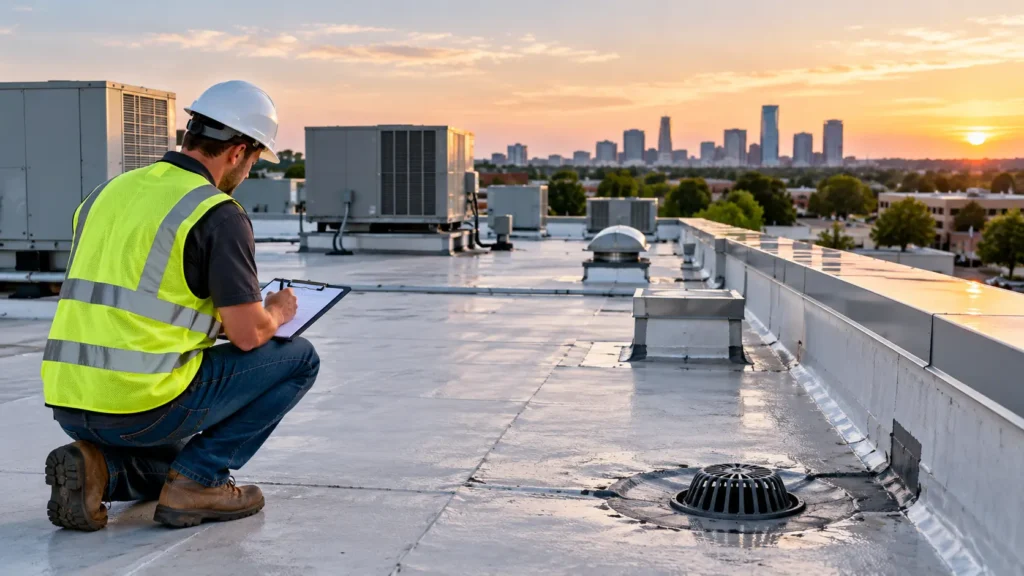
A commercial roof is one of the most important components protecting your business, employees, equipment, inventory, and building interior. In North Dallas–Fort Worth, commercial roofing systems can face intense sun, heavy rain, strong winds, hail, temperature changes, and severe thunderstorms throughout the year. Without regular maintenance, small roofing problems can quickly become costly repairs.
A practical commercial roof maintenance checklist helps property owners and facility managers identify problems early, maintain roof performance, and reduce the risk of unexpected downtime. Whether you manage an office, retail property, warehouse, medical facility, or other commercial building, consistent preventive maintenance can help preserve your roofing investment.
For professional roofing services in North Texas, visit Qualitas Roofing to learn more about available solutions.
Why Commercial Roof Maintenance Matters
Commercial roofs often cover large areas and may contain multiple components, including membranes, flashing, drains, seams, insulation, vents, penetrations, and rooftop equipment. A problem in one area can eventually affect other parts of the roofing system.
Regular preventive roof maintenance for businesses can help detect water intrusion, damaged materials, drainage problems, and other concerns before they become major issues.
Maintenance can also support extending commercial roof lifespan by keeping the roofing system in good operating condition and addressing smaller deficiencies before they contribute to premature deterioration.
Property owners can review commercial roofing services to understand the types of solutions available for different roofing needs.
Commercial Roof Maintenance Checklist
1. Inspect the Roof Surface
The first step in a commercial roof maintenance checklist is examining the overall roof surface.
Look for visible changes such as cracks, punctures, blisters, loose materials, open seams, membrane deterioration, or areas where the roofing surface appears damaged.
Different roofing systems can show different forms of wear, so inspections should consider the specific roofing materials installed on the property.
Regular visual inspections make it easier to identify changes from one inspection to the next.
2. Check Flashing and Roof Penetrations
Flashing around vents, pipes, HVAC equipment, skylights, walls, and other penetrations is particularly important.
Damaged or deteriorated flashing can create pathways for water to enter the building. Pay attention to loose sections, damaged sealants, gaps, or other visible deterioration.
Because commercial roofs often have numerous penetrations, these areas should be included in every inspection.
3. Keep Drains, Gutters, and Scuppers Clear
Water drainage is a critical part of commercial roof performance. Leaves, dirt, debris, and other materials can block drains and prevent water from leaving the roof efficiently.
Standing water can place additional stress on roofing materials and may indicate drainage or slope-related problems.
Include the following in your routine maintenance:
- Remove debris around drains and drainage channels.
- Check gutters and downspouts for blockages.
- Inspect scuppers and other drainage outlets.
- Look for areas where water repeatedly collects after rainfall.
- Report drainage problems before they become recurring issues.
Keeping drainage systems clear is one of the simplest ways to support long-term roof performance.
4. Inspect Seams, Edges, and Membrane Conditions
For commercial buildings with membrane roofing, seams and edges deserve close attention.
Check for separation, lifting, cracking, exposed areas, or other signs of deterioration. Edge materials should also be inspected because they may be exposed to wind and weather conditions.
Small seam problems may not cause immediate visible leaks, but they can become more serious over time.
[cta]
5. Examine Rooftop Equipment Areas
Commercial buildings commonly have HVAC systems, vents, exhaust equipment, electrical equipment, and other installations on the roof.
Maintenance personnel should look around these areas for signs of damaged roofing materials, deteriorated flashing, loose components, or water accumulation.
Any work performed around rooftop equipment should be coordinated carefully to avoid accidentally damaging the roofing system.
6. Look for Signs of Water Intrusion
Not every roofing problem is visible from the exterior. Interior inspections are also an important part of your maintenance program.
Check ceilings, walls, insulation, and interior areas beneath the roof for:
- Water stains
- Damp materials
- Musty odors
- Peeling finishes
- Discoloration
- Active dripping or moisture
These can be signs of commercial roof damage and may indicate that further investigation is needed.
If you discover signs of water intrusion, addressing the issue quickly can help limit additional damage to the building interior.
7. Inspect After Severe Weather
North DFW properties can experience storms with strong winds and hail. After significant weather events, it is important to inspect the roof for newly developed damage.
Look for displaced materials, punctures, damaged flashing, debris, and other visible changes.
For properties affected by hail, Qualitas Roofing provides information about hail damage roof repair in DFW.
Post-storm inspections can help identify problems that may otherwise remain unnoticed until the next major rainfall.
How Often Should Commercial Roofs Be Inspected?
One common question property owners ask is, how often should commercial roofs be inspected?
The appropriate frequency depends on factors such as the roofing system, building age, local weather exposure, roof condition, and maintenance history.
Many commercial property owners benefit from routine inspections at least twice a year, along with additional inspections following significant storms or other major weather events.
Developing a commercial roof inspection schedule makes inspections more consistent and reduces the chance that maintenance will be forgotten.
A practical approach is to schedule inspections around seasonal changes, particularly before periods of severe weather. North Texas property owners can also review Qualitas Roofing’s service areas for regional roofing support.
When Should You Schedule Professional Commercial Roof Maintenance?
Routine in-house visual checks are useful, but professional inspections are important when the roof has visible damage, recurring leaks, drainage problems, or signs of aging.
A qualified roofing contractor can evaluate areas that may be difficult to identify during a basic walk-through and help determine whether maintenance, repair, or a larger roofing project is appropriate.
Working with an experienced commercial roofing contractor in Keller TX can also help local businesses create a maintenance plan based on the property’s roofing system and exposure.
You can learn more about the company and its approach on the Qualitas Roofing About page.
Benefits of Preventive Roof Maintenance for Businesses
Preventive maintenance is not simply about fixing problems. It is about creating a repeatable process for identifying and addressing roofing concerns.
A structured maintenance program can help businesses:
- Reduce the likelihood of unexpected leaks.
- Identify developing problems earlier.
- Protect interior spaces and stored property.
- Maintain drainage performance.
- Reduce avoidable emergency repair situations.
- Improve long-term roof performance.
- Support extending commercial roof lifespan.
- Make roofing expenses easier to plan and budget.
For businesses that rely on uninterrupted operations, preventive maintenance can be especially valuable because unexpected roof problems may disrupt employees, customers, inventory, or equipment.
Seasonal Commercial Roof Maintenance in North DFW
A year-round maintenance strategy should account for changing weather conditions.
Spring: Inspect for damage left by winter weather and prepare drainage systems for heavy rainfall.
Summer: Check for deterioration related to heat and prolonged sun exposure. Inspect rooftop equipment and flashing.
Fall: Remove accumulated debris, clean drainage components, and address developing issues before stronger seasonal storms.
Winter: Monitor for drainage problems, damaged materials, and any water intrusion following severe weather.
Keeping documentation for each inspection can also make it easier to track recurring problems and compare the roof’s condition over time.
For additional roofing guidance, visit the Qualitas Roofing blog.
Build a Commercial Roof Maintenance Plan
A checklist is most effective when it becomes part of a documented maintenance program. Property owners should keep records of inspection dates, observed deficiencies, completed repairs, photographs, and recommendations from roofing professionals.
When a problem is identified, document its location and condition so that it can be monitored until the issue is resolved.
For larger commercial properties, maintenance responsibilities can also be assigned to facility managers or building maintenance teams to ensure inspections happen consistently.
If your property requires an inspection, repair, or ongoing maintenance service, you can contact Qualitas Roofing to discuss your commercial roofing needs.
Protect Your Commercial Property Year-Round
A well-maintained commercial roof provides an important layer of protection for your building and everything inside it. Using a consistent commercial roof maintenance checklist can help property owners identify damage, maintain drainage, monitor vulnerable areas, and address developing problems before they become more expensive.
From routine inspections to post-storm evaluations, proactive maintenance is an important part of responsible commercial property management in North Dallas–Fort Worth.
Whether you are dealing with an existing roofing concern or establishing a long-term maintenance strategy, professional guidance can help you better understand the condition of your roof and the appropriate next steps.
[cta]
FAQs
1. What should be included in a commercial roof maintenance checklist?
A commercial roof maintenance checklist should include roof-surface inspections, flashing and penetration checks, drainage inspections, seam and membrane evaluations, rooftop equipment areas, interior signs of water intrusion, and post-storm inspections. Keeping records of each inspection is also recommended.
2. How often should commercial roofs be inspected?
The inspection frequency depends on the roofing system, age, condition, weather exposure, and maintenance history. Many properties benefit from inspections at least twice a year, with additional inspections after significant storms or severe weather events.
3. What are common signs of commercial roof damage?
Common signs include leaks, water stains, ponding water, damaged flashing, open seams, punctures, cracks, deteriorating membranes, blocked drainage systems, and visible storm-related damage. Some problems may not be obvious without a professional inspection.
4. How does preventive roof maintenance help businesses?
Preventive roof maintenance helps identify developing problems before they become larger issues. It can help reduce unexpected leaks, protect the building interior, support better roof performance, and contribute to extending commercial roof lifespan.
5. When should a business call a commercial roofing contractor?
A business should consider contacting a roofing contractor when it notices recurring leaks, visible roof damage, drainage problems, storm damage, deteriorating materials, or other changes in roof condition. Professional inspections are also useful when planning long-term maintenance.
6. Can severe weather shorten the lifespan of a commercial roof?
Yes. Repeated exposure to hail, strong winds, heavy rain, heat, and other severe weather can contribute to roofing deterioration. Regular inspections and timely maintenance can help identify weather-related damage and keep the roofing system operating properly.
7. Is commercial roof maintenance different from residential roof maintenance?
Yes. Commercial roofs are often larger and may use different roofing systems and contain more rooftop equipment, penetrations, and drainage components. Maintenance therefore needs to account for the building’s specific roofing design, materials, and operational requirements.