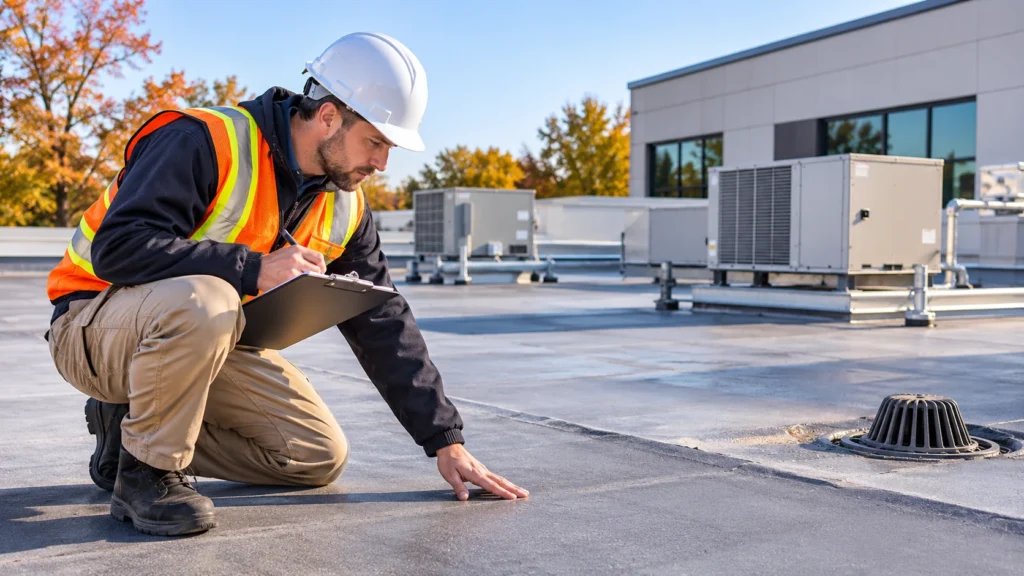
A commercial roof protects more than the building itself. It safeguards equipment, inventory, employees, tenants, and daily business operations. For property owners and facility managers across North Dallas-Fort Worth, keeping the roofing system in good condition is essential to preventing unexpected leaks, operational disruptions, and expensive structural repairs.
Unlike many residential roofs, commercial roofing systems often have larger surface areas, specialized drainage components, rooftop HVAC equipment, and multiple seams or penetrations. These features require regular attention to identify potential problems before they become major maintenance concerns.
A professional commercial roof inspection provides a clearer understanding of the roof’s current condition, identifies developing damage, and helps property managers plan maintenance expenditures more effectively.
Whether your property has a flat roof, metal roofing, or a single-ply membrane system, this guide explains what an inspection should cover, what findings should be documented, and when to contact commercial roofing contractors in North DFW.
Why Commercial Roof Inspections Matter
Commercial roofs experience continuous exposure to sunlight, temperature changes, rainfall, wind, and severe weather. In North Texas, intense summer heat, hailstorms, and strong winds can gradually affect roofing materials and protective components.
Even minor damage can create problems when left unaddressed. A small opening in a roofing membrane, for example, may allow water to enter the roof assembly. Moisture can then affect insulation, ceilings, electrical components, and interior spaces.
Regular inspections help property managers:
- Identify roofing damage before it spreads.
- Detect drainage problems and standing water.
- Monitor the condition of roofing materials.
- Document maintenance requirements.
- Plan repair budgets and future replacements.
- Reduce the likelihood of unexpected building disruptions.
A scheduled inspection program also provides historical records that help compare roof conditions over time. Industry guidance from roofing organizations recommends periodic inspections and additional evaluations following severe weather events.
[cta]
What Should a Commercial Roof Inspection Include?
A proper commercial roof assessment should examine the entire roofing system rather than focusing only on visible surface damage.
The inspection process may vary depending on the building’s size, roofing material, age, and accessibility. However, several important components should generally be evaluated.
1. Roofing Membrane and Surface Condition
Many commercial properties use flat or low-slope roofing systems, including TPO, EPDM, PVC, modified bitumen, or built-up roofing.
An inspector should examine the surface for punctures, cracks, blisters, open seams, loose sections, and visible deterioration. Areas showing unusual wear should be documented for further evaluation.
2. Roof Seams and Flashing
Seams and flashing help prevent water from entering vulnerable areas of the roofing system.
Inspectors should examine membrane joints, perimeter flashing, parapet walls, equipment curbs, and transitions between different building surfaces.
Loose flashing, deteriorated sealants, and separated seams may indicate potential entry points for moisture.
3. Drainage Systems
Commercial roofs need effective drainage to prevent excessive water accumulation.
The inspection should cover roof drains, scuppers, gutters, and downspouts. Inspectors should also identify debris accumulation, blocked drainage points, and areas where water remains standing.
4. Rooftop HVAC Equipment and Penetrations
Commercial buildings frequently have air conditioning units, ventilation equipment, electrical conduits, and other rooftop installations.
Inspectors should evaluate the surrounding flashing, equipment curbs, sealants, and visible roof conditions around these penetrations.
Maintenance work performed by other contractors can sometimes create accidental roof damage, making these areas particularly important during inspections.
5. Interior Signs of Water Damage
An effective inspection should not stop at the roof surface.
Accessible interior areas should also be checked for ceiling stains, damp insulation, discoloration, recurring leaks, and signs of previous water intrusion.
These findings can help contractors investigate possible leak sources and determine whether additional testing is necessary.
Commercial Roof Inspection Checklist
Property managers can use the following commercial roof inspection checklist to understand the major areas that need attention.
| Inspection Area | What to Evaluate |
|---|---|
| Roof membrane | Cracks, punctures, blisters, and deterioration |
| Seams and joints | Separation, openings, and loose edges |
| Flashing | Damage, gaps, and deteriorated sealants |
| Roof drains | Blockages, debris, and drainage performance |
| Gutters and scuppers | Water flow and visible damage |
| HVAC equipment | Curb flashing and surrounding roof conditions |
| Roof penetrations | Sealants and protective flashing |
| Parapet walls | Cracks, coping, and flashing conditions |
| Roof surface | Ponding water and debris accumulation |
| Interior spaces | Ceiling stains and moisture concerns |
The checklist is a planning reference, not a substitute for a professional inspection. Roof access, testing, and repairs should be handled by qualified personnel using appropriate safety procedures.
How to Prioritize Inspection Findings
Not every roofing issue requires immediate repair. However, property managers should understand which findings could affect building operations or lead to additional damage.
A useful commercial roof assessment should categorize findings according to their severity and recommended response.
Urgent Issues: Active water intrusion, substantial membrane openings, major flashing failures, or conditions creating immediate safety concerns. These should receive prompt attention.
Priority Repairs: Open seams, damaged roof penetrations, drainage problems, and deteriorating flashing that could lead to water intrusion if left unaddressed.
Preventive Maintenance: Minor sealant deterioration, manageable debris accumulation, and early signs of material wear that should be addressed as part of routine maintenance.
Monitoring Items: Conditions that do not currently require repair but should be documented and reviewed during future inspections.
Property managers should request photographs, location details, and repair recommendations for significant findings. This makes it easier to compare contractor proposals, allocate budgets, and schedule work based on actual building needs.
When Should You Schedule a Professional Roof Assessment?
Commercial property owners should establish a regular inspection schedule rather than waiting until a leak or visible problem develops.
Spring and fall are practical times to arrange a commercial roof maintenance inspection. Additional evaluations should be considered after significant hailstorms, strong winds, or other severe weather events.
You should also consider scheduling an inspection when:
- Your building has experienced recurring roof leaks.
- The roof has not been professionally evaluated recently.
- You are preparing an annual maintenance budget.
- The property has recently undergone HVAC or rooftop equipment work.
- You are reviewing the building before purchasing or leasing it.
- You need to understand the roof’s condition before planning repairs or replacement.
A professional inspection is particularly important for larger buildings and complex roofing systems where problems may not be visible from accessible areas.
Qualitas Roofing provides commercial roofing services to help property owners address roofing concerns and evaluate their commercial properties.
How Regular Roof Maintenance Protects Your Investment
A commercial roof maintenance program helps property managers move from reactive repairs to planned maintenance.
Instead of waiting for problems to appear inside the building, routine inspections allow maintenance teams to monitor developing conditions and address appropriate repairs earlier.
A structured maintenance program should include documented inspections, drainage maintenance, removal of suitable surface debris, review of previous repairs, and follow-up assessments after severe weather.
It is also important to maintain historical records, including roof installation details, material specifications, warranty documents, previous repair invoices, and inspection reports.
Working with experienced commercial roofing contractors can help ensure maintenance activities are appropriate for the specific roofing system installed on your building.
Property owners can explore commercial roof maintenance services to understand how scheduled maintenance can support long-term roof performance.
For businesses operating throughout the surrounding North DFW communities, Qualitas Roofing’s service areas provide additional information about its coverage.
[cta]
Frequently Asked Questions
1. How often should a commercial roof be inspected?
Commercial roofs should generally receive professional inspections at least twice a year, preferably in spring and fall. Additional inspections are advisable after significant hailstorms, strong winds, or other severe weather events. Buildings with heavy rooftop equipment or specific environmental conditions may require more frequent attention.
2. What is included in a commercial roof inspection?
A commercial roof inspection typically covers the roofing membrane, seams, flashing, drainage systems, rooftop equipment, penetrations, and visible signs of moisture intrusion. The contractor may also examine accessible interior areas for water stains or other evidence of leaks. Findings should be documented with photographs and repair recommendations.
3. Why is a flat roof inspection important?
Flat and low-slope roofs can develop drainage problems that allow water to accumulate on the surface. They also contain seams, flashing, and equipment penetrations that require regular evaluation. A professional flat roof inspection helps identify potential weaknesses and determine whether maintenance or repairs are needed.
4. Can regular inspections prevent expensive commercial roof repairs?
Regular inspections cannot eliminate every roofing problem, but they can help identify developing damage before it becomes more extensive. Addressing drainage problems, damaged flashing, and membrane deterioration early may reduce the likelihood of larger repair projects and interior water damage.
5. What should property managers receive after a commercial roof assessment?
Property managers should request a written inspection report containing photographs, identified problem areas, descriptions of roof conditions, repair recommendations, and suggested maintenance priorities. Information about the roofing materials, warranty considerations, and recommended follow-up inspections can also help with long-term planning.
6. When should a commercial roof be repaired or replaced?
The decision depends on the roof’s age, existing damage, material condition, repair history, and overall performance. Localized damage may require targeted commercial roof repairs, while widespread deterioration or recurring failures may justify evaluating replacement options. A professional assessment can help determine the most appropriate approach.
Schedule a Commercial Roof Inspection for Your DFW Property
A commercial roofing system is a significant investment, and its condition can directly affect your building’s maintenance expenses and daily operations.
Regular inspections help property managers identify potential problems, prioritize necessary repairs, and maintain accurate records of roof conditions. More importantly, they provide a structured approach to protecting the building rather than responding only after damage occurs.
Qualitas Roofing helps property owners explore roofing solutions and maintenance options for their commercial properties. You can learn more about the company and its approach to roofing or explore its complete range of roofing services.
For additional roofing information, visit the Qualitas Roofing blog.
Whether you manage an office building, retail property, warehouse, or another commercial facility, arranging a professional roof inspection can help you make informed maintenance decisions.
Visit the Qualitas Roofing contact page to discuss your commercial roofing needs and schedule an assessment.