
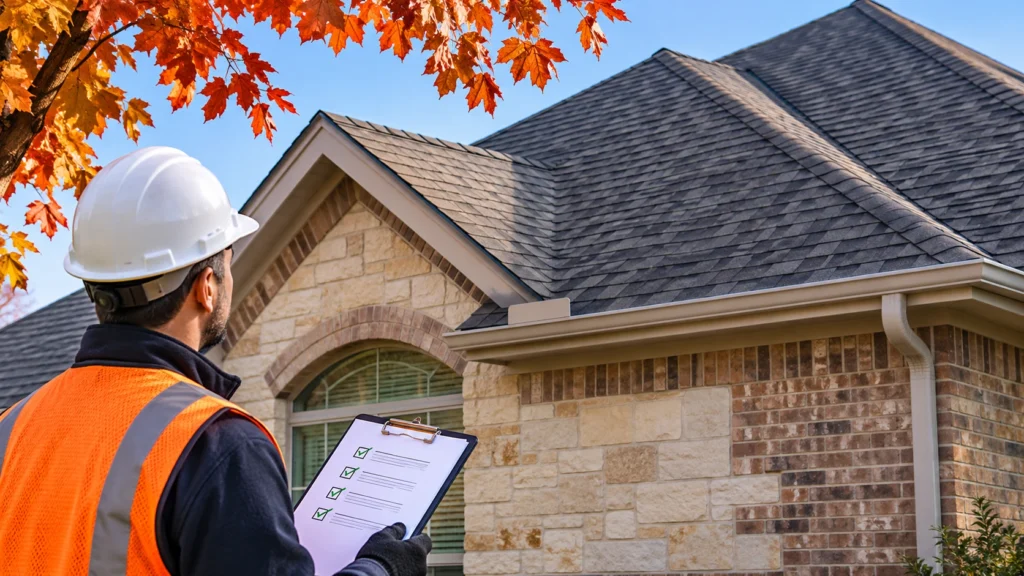
North Texas winters may not last as long as winters in colder parts of the country, but homeowners in the Dallas-Fort Worth area should not underestimate the impact of freezing temperatures, strong winds, freezing rain, and occasional ice storms. Even a small roofing problem can become more serious when winter weather arrives.
A missing shingle, loose flashing, clogged gutter, or poorly sealed roof penetration can allow moisture to enter your home. When temperatures drop, existing moisture problems may become more difficult to manage, potentially leading to leaks, water stains, and interior damage.
A seasonal roof inspection helps identify visible warning signs before colder weather arrives. Homeowners can perform several basic visual checks from the ground without climbing onto the roof. However, some roofing problems require a trained professional to identify and evaluate properly.
This guide explains what DFW homeowners should check before winter and when to consider professional roof inspection services from Qualitas Roofing.
Why a Pre-Winter Roof Inspection Matters
Your roof protects your home from rain, wind, moisture, and changing temperatures throughout the year. However, small issues that go unnoticed during warmer months can become more problematic during winter weather.
For example, damaged shingles may allow rainwater to reach the underlying roofing materials. Loose flashing can create entry points for moisture around chimneys, vents, and skylights. Clogged gutters may prevent proper drainage and contribute to water-related damage around the roof edges.
A roof inspection before winter helps homeowners identify these concerns early and decide whether maintenance or repairs are necessary.
The National Roofing Contractors Association recommends regular roof inspections, preferably in spring and fall, along with additional inspections after severe weather events.
1. Check for Missing or Damaged Shingles
Shingles are one of the first areas to examine during a residential roof inspection. They form an important protective layer that helps prevent water from entering your home.
From the ground, look for visible signs of damage, including:
- Missing shingles or noticeable gaps in the roof surface.
- Shingles that appear curled, cracked, or lifted.
- Dark patches or uneven sections across the roof.
- Loose roofing materials around the edges.
- Shingle granules collecting near downspouts.
North Texas properties can experience strong winds and hailstorms, which may weaken or displace roofing materials.
Even a small damaged section can allow moisture to penetrate the roof system. Do not attempt to replace shingles or walk on the roof yourself. Have a roofing professional assess any suspicious areas.
2. Inspect Flashing Around Roof Openings
Roof flashing is installed around areas where the roof meets another surface or where something passes through the roofing system. These areas include chimneys, skylights, plumbing vents, and roof valleys.
Flashing helps direct water away from vulnerable joints and openings.
During your pre-winter inspection, look for visible signs such as:
- Bent or displaced metal flashing.
- Gaps around chimneys or skylights.
- Cracked or deteriorating sealant.
- Rust or visible separation around roof openings.
- Water stains near ceiling areas beneath these locations.
Flashing problems are not always easy to identify from the ground. A professional roof inspection can help determine whether these areas are properly sealed and whether repairs are needed.
3. Look for Clogged or Damaged Gutters
Gutters and downspouts play an important role in protecting your roofing system. They collect rainwater and direct it away from your home’s exterior and foundation.
During fall, leaves, twigs, and other debris can accumulate inside gutters. If drainage becomes restricted, water may overflow or collect near the roof edges.
Before winter, check whether:
- Gutters appear filled with leaves or debris.
- Sections are visibly sagging or pulling away.
- Downspouts appear blocked or disconnected.
- Water stains are visible along exterior walls.
- Gutters are directing water away from the foundation.
Clean gutters before winter and arrange professional assistance when access is difficult or the gutters are damaged. Avoid leaning ladders against gutters or climbing onto the roof to clear debris.
Proper drainage is an important part of protecting your roof during seasonal rainfall and freezing conditions.
[cta]
4. Check Trees and Overhanging Branches
Trees surrounding your property can create roofing problems during storms. Overhanging branches may scrape against shingles, drop leaves into gutters, or break during strong winds.
Freezing rain and ice accumulation can also increase the weight of branches, creating a potential risk to nearby roofing materials.
Walk around your property and look for:
- Branches extending directly over the roof.
- Dead or visibly weakened tree limbs.
- Branches touching shingles or roof edges.
- Trees growing close to your home’s structure.
Arrange professional tree trimming when necessary. Keeping branches away from your roof reduces the risk of impact damage and helps prevent debris accumulation.
5. Watch for Signs of Roof Leaks
Not every roofing problem is visible from outside your home. Some early warning signs appear indoors, particularly around ceilings, walls, and attic spaces.
Before winter arrives, inspect accessible interior areas for:
- Brown or yellow ceiling stains.
- Peeling paint near ceilings or upper walls.
- Damp spots around skylights and chimneys.
- Musty smells in upper rooms or attic areas.
- Visible moisture or discoloration in accessible attic spaces.
If you have safe access to your attic, look for water stains, damp insulation, or signs of previous moisture. Do not step onto exposed ceiling joists or disturb insulation, electrical wiring, or other building materials.
Remember that a roof leak may originate some distance from where the water stain appears. A professional evaluation can help locate the actual source rather than simply addressing the visible interior damage.
6. Review Roof Ventilation and Attic Conditions
Proper attic ventilation helps manage heat and moisture inside your roofing system. When ventilation is inadequate, excess moisture can accumulate and contribute to condensation, mold growth, or deterioration of roofing components.
During a basic inspection, look for visible signs of trouble, such as:
- Blocked soffit or roof vents.
- Excessive moisture in accessible attic areas.
- Damp or compressed insulation.
- Signs of mold or unusual discoloration.
- Unusual temperature differences or persistent attic moisture concerns.
North Texas homeowners should not assume attic ventilation is working properly just because the roof looks undamaged from outside.
A roofing professional can assess the ventilation system and determine whether adjustments or repairs are necessary before winter.
7. Check for Previous Roof Repairs
If your home has undergone roof repairs in the past, pay particular attention to those areas during your seasonal inspection.
Previous repair locations may include sections affected by hail, wind damage, missing shingles, or earlier leaks.
Look for visible differences in roofing materials, uneven sections, or signs that previous damage may have returned.
Keep records of previous repairs, including photographs, invoices, and warranty information. These records can help a roofing contractor understand the roof’s history and identify areas that may need additional attention.
For homeowners considering broader roofing improvements, exploring residential roofing services can help clarify the available repair and replacement options.
When Should You Schedule a Professional Roof Inspection?
A ground-level inspection is useful for identifying visible warning signs, but it cannot replace a detailed evaluation by an experienced roofing professional.
Consider scheduling professional roof inspection services when you notice missing shingles, damaged flashing, recurring leaks, sagging areas, or visible storm damage.
You should also consider an inspection if your roof is older, has not been evaluated recently, or has experienced significant hail or wind exposure.
During a professional roof evaluation, the contractor can assess roofing materials, flashing, drainage, penetrations, ventilation, and other components that may not be visible from the ground.
Qualitas Roofing offers roof inspection services to help homeowners understand their roof’s condition and identify potential maintenance or repair needs.
Homeowners in the surrounding North DFW communities can also check the company’s service areas to learn more about local availability.
Understanding Roof Inspection Costs
One common question homeowners ask before scheduling an inspection is how much a roof inspection costs.
The roof inspection cost depends on several factors, including:
- Roof size and overall complexity.
- Roofing material and roof pitch.
- Accessibility and property layout.
- Extent of the inspection required.
- Whether a detailed report or additional assessment is requested.
Some roofing companies offer inspections at no charge under certain circumstances, while others charge a separate inspection fee. Always confirm the scope and pricing before scheduling.
When comparing contractors, avoid choosing one based on price alone. Ask whether the inspection includes photographs, documented findings, and recommendations for necessary repairs.
A detailed inspection can help you understand which problems require immediate attention and which items can be monitored over time.
[cta]
Frequently Asked Questions
1. How often should homeowners schedule a roof inspection?
Most homeowners should consider having their roof professionally inspected at least twice a year, preferably in spring and fall. Additional inspections are recommended after significant hailstorms, strong winds, or other severe weather events. Regular inspections help identify minor problems before they develop into more expensive repairs.
2. When is the best time for a roof inspection before winter in Texas?
Fall is generally a good time to schedule a roof inspection before winter in North Texas. Scheduling early allows homeowners to identify and address roofing issues before freezing temperatures, strong winds, or winter storms arrive. Avoid inspecting the roof during wet or icy conditions.
3. Can I perform a roof inspection myself?
Homeowners can perform basic visual checks from the ground using binoculars and by examining accessible interior areas. However, climbing onto the roof can be dangerous, particularly when surfaces are damaged, wet, or slippery. A professional roofing contractor should evaluate areas that require closer examination.
4. What are the most common signs that my roof needs repair?
Common warning signs include missing or curling shingles, loose flashing, clogged gutters, ceiling stains, water leaks, and damaged roof edges. You may also notice granules collecting around downspouts or unusual moisture in accessible attic areas. These signs should be evaluated before winter weather arrives.
5. How much does a professional roof inspection cost?
Roof inspection cost varies depending on the property’s size, roofing material, accessibility, and the level of inspection required. Some contractors provide complimentary inspections, while others charge a separate fee. Ask for clear pricing and confirm what the inspection includes before booking.
6. Should I schedule a roof inspection after a hailstorm?
Yes. Hail can damage shingles, metal flashing, gutters, and other roofing components. Some damage may not be immediately visible from the ground. Scheduling a professional evaluation after a significant hailstorm can help document the roof’s condition and identify repairs that may be necessary.
Protect Your Home With a Pre-Winter Roof Inspection
Preparing your roof before winter is an important part of maintaining your home’s overall condition. Checking shingles, flashing, gutters, nearby trees, and interior warning signs can help identify potential problems before colder weather arrives.
However, ground-level checks have limitations. A qualified roofing professional can provide a more detailed assessment and help determine whether repairs or maintenance are needed.
At Qualitas Roofing, homeowners can explore roofing services and learn more about maintaining and protecting their roofs. You can also learn more about the company or browse its latest roofing resources.
Do not wait until a leak appears during a winter storm. Schedule a professional roof inspection before the colder weather arrives. Visit the Qualitas Roofing contact page to discuss your roofing concerns and arrange an evaluation.